
Product Details
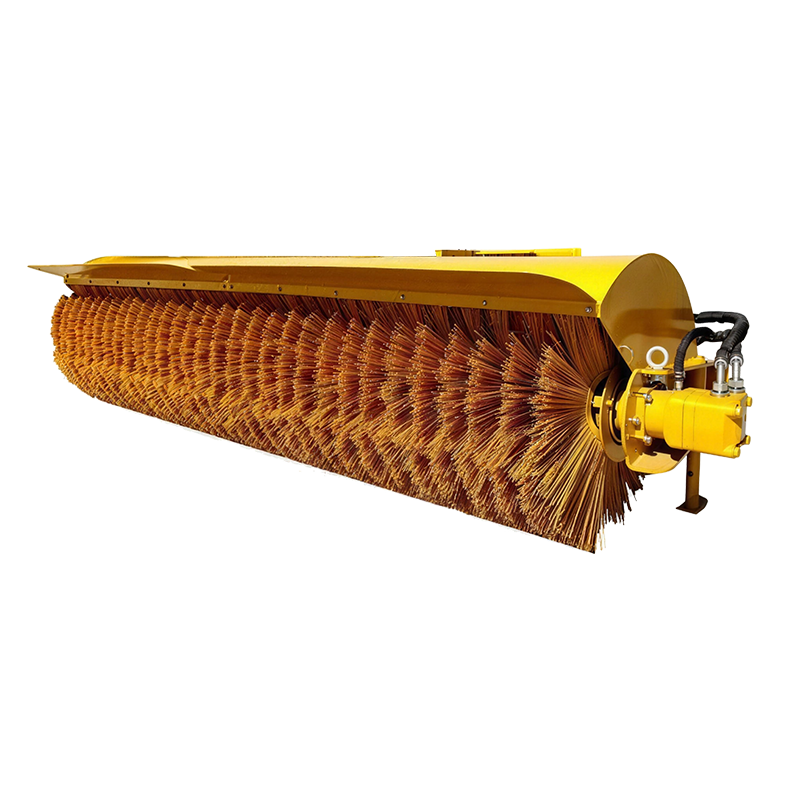
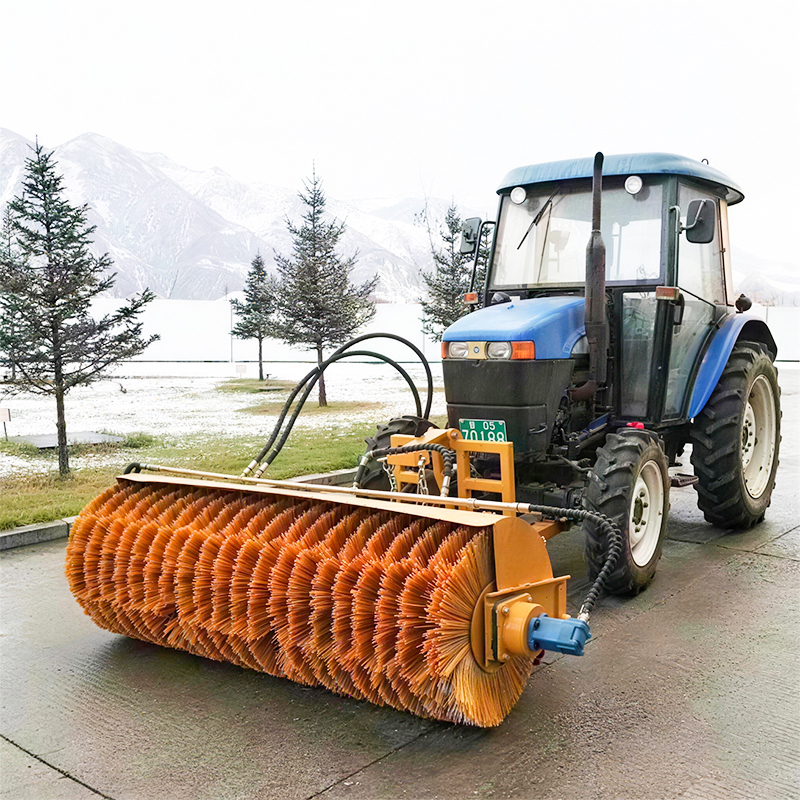
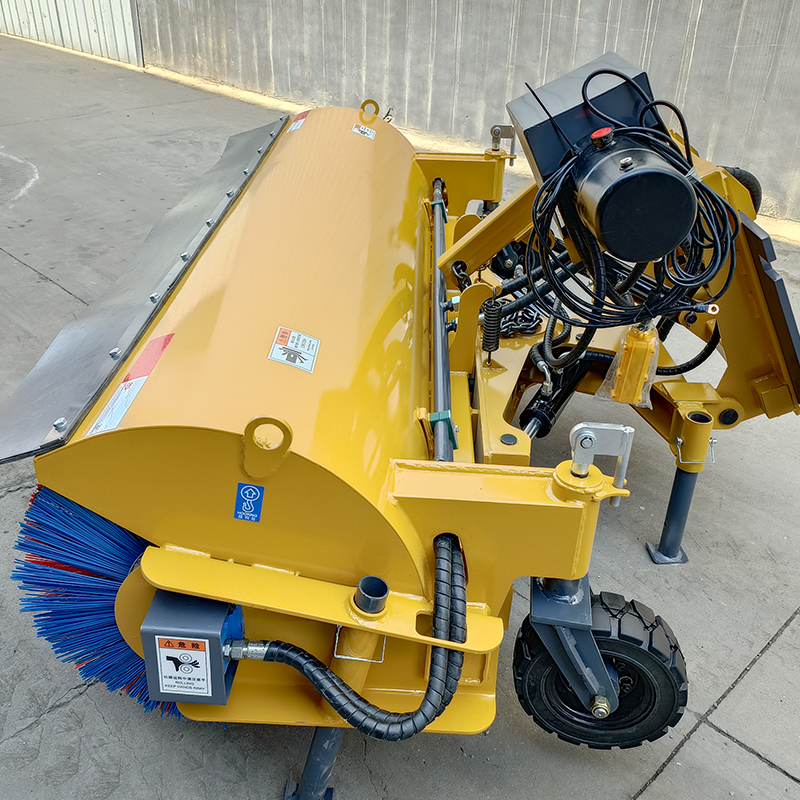
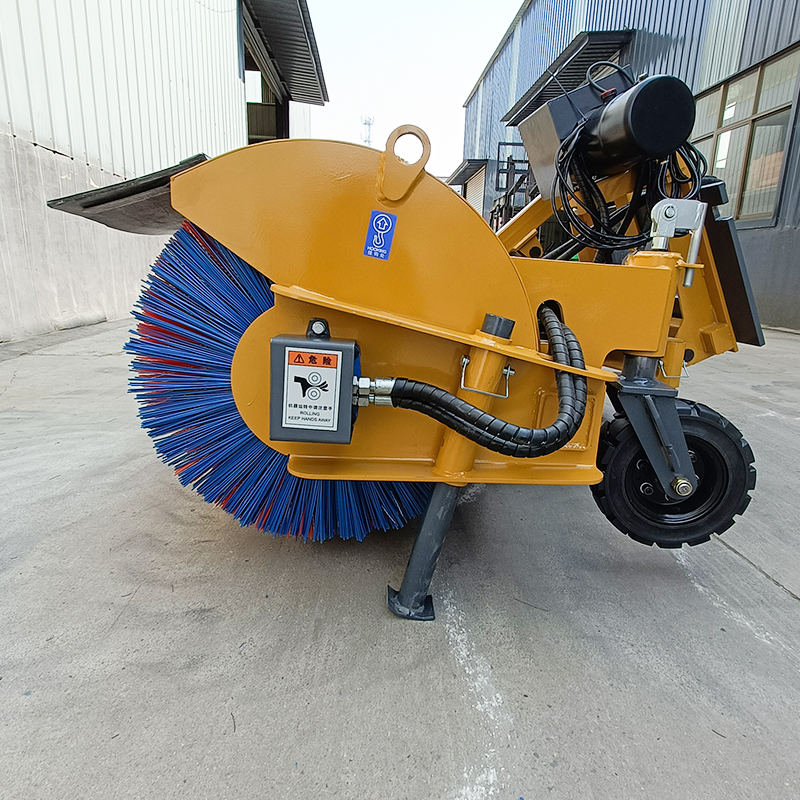
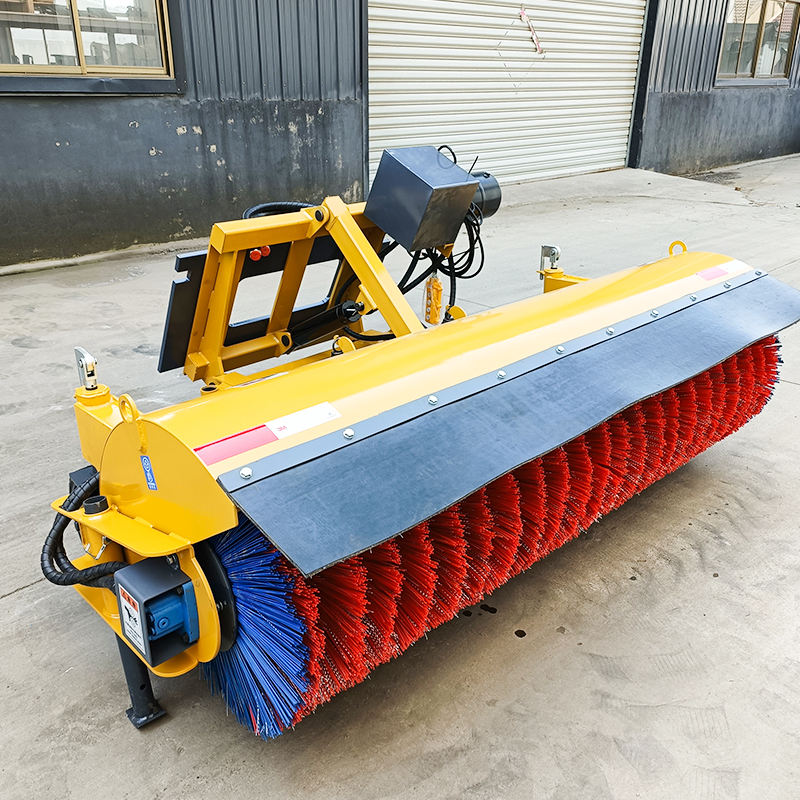
- Parameter
- Introduction
| Indicator | Unit | 72 " /560 | 72 " /670 | 84 " /670 | 84 " /810 |
| Working width | mm | 1828 | 1828 | 2133 | 2133 |
| Brush diameter | mm | 560 | 670 | 670 | 812 |
| Corner | ° | 30 | 30 | 30 | 25 |
| Work pressure | MPa | 16 | 16 | 16 | 16-21 |
| Workflow | L/mm | 50-125 | 50-125 | 50-125 | 50-125 |
| Weight | kg | 340 | 380 | 420 | 480 |
| Length | mm | 2030 | 2030 | 2335 | 1780 |
| Width | mm | 1020 | 1020 | 1050 | 2450 |
| Height | mm | 640 | 740 | 740 | 900 |
I. Core Structure and Working Principle
A typical snow blower primarily consists of a prime mover, transmission device, snow-gathering device, snow-throwing device, walking system, and operating system. The prime mover, serving as the power source, often uses gasoline or diesel engines, with some models utilizing electric motors. Its workflow is clear and efficient: first, the snow-gathering device (usually a snowplow blade or spiral auger) collects snow from the ground; subsequently, the snow-throwing device (commonly a throwing impeller or blower) propels the snow to the side of the road or into a designated collection unit. The walking system enables the machine's movement, mainly divided into push-behind models requiring manual force and self-propelled models with their own driving power.
One of the most prominent advantages of snow blowers is their strong environmental adaptability. They can handle different forms of snow and ice, including powder snow, packed snow, and even ice layers, and typically do not require reliance on salt or melting agents, enabling environmentally friendly snow removal. Their snow removal efficiency is extremely high, reaching over 95%, capable of clearing down to the bare pavement in one pass without damaging road markings or the surface. To clear different types of ice and snow, the machines are equipped with various specialized components: for instance, high-density, high-elasticity steel wire brushes are used to remove thin ice and thin packed snow; for thick ice, rolling-cutter wheels are used in conjunction with rolling-impact wheels, assisted by an auxiliary ice-breaking auger to break large chunks of ice and snow for disposal.
II. Main Types and Characteristics
Based on different working principles, snow blowers can be mainly categorized into the following types:
1. Plowing/Pushing Type Snow Blower: Typically involves attaching a snowplow blade to the front of large vehicles like bulldozers or trucks to push snow aside. Its advantages are simple structure, suitable for clearing thicker snow, but the disadvantages include inability to collect and throw snow over a distance, and potential for damaging the ground surface.
2. Throwing Type Snow Blower: This is the most common type. It uses a spiral auger to gather snow, then employs a high-speed rotating impeller to generate centrifugal force, throwing the snow away. It combines snow gathering and throwing functions, with a throwing distance up to 10-15 meters, adjustable direction, and wide applicability.
Furthermore, based on the form of the snow-gathering device, there are common classifications such as plow-type snow removers, brush-type snow blowers, and throwing-type snow removers, each with its own advantages and disadvantages in clearing deep snow, handling uneven surfaces, or loading snow onto vehicles.
III. Advantages and Application Prospects
The comprehensive advantages of snow blowers are significant. The working efficiency of one snow blower is equivalent to 20 manual laborers, greatly reducing labor costs and intensity. Many models are also equipped with lights, supporting nighttime or early morning operations, ensuring the timeliness of snow removal work. With technological advancements, modern snow blowers are developing towards easier operation, more powerful performance, and multi-functionality, such as achieving snow blowing, plowing, and lawn mowing through interchangeable modules.
From a market perspective, with the acceleration of global urbanization and the increase in extreme weather events, the snow blower industry shows a trend of continuous growth. Statistics indicate that the global snow blower market size has exceeded 10 billion RMB and is expected to maintain steady growth. Demand is particularly strong in regions like North America, Europe, and Asia. In China, with rising winter snow removal demands and the promotion of relevant policies and standards, the snow blower industry has also become an important force in the field of winter infrastructure maintenance.
In summary, as an efficient, economical, and environmentally friendly specialized device for winter snow removal, the snow blower continues to innovate technologically and finds increasingly widespread application, playing an irreplaceable role in ensuring winter traffic safety and smooth flow.